
Storm Damage Repair
Storm damage repair starts with making the problem stop getting worse. Rim Rock Property Plus assesses wind, snow, and ice damage on North Spokane County homes, performs temporary repairs to keep weather out, documents everything for your insurance claim, and coordinates the larger repair work that follows. One call covers the sequence from tarp to finished fix.
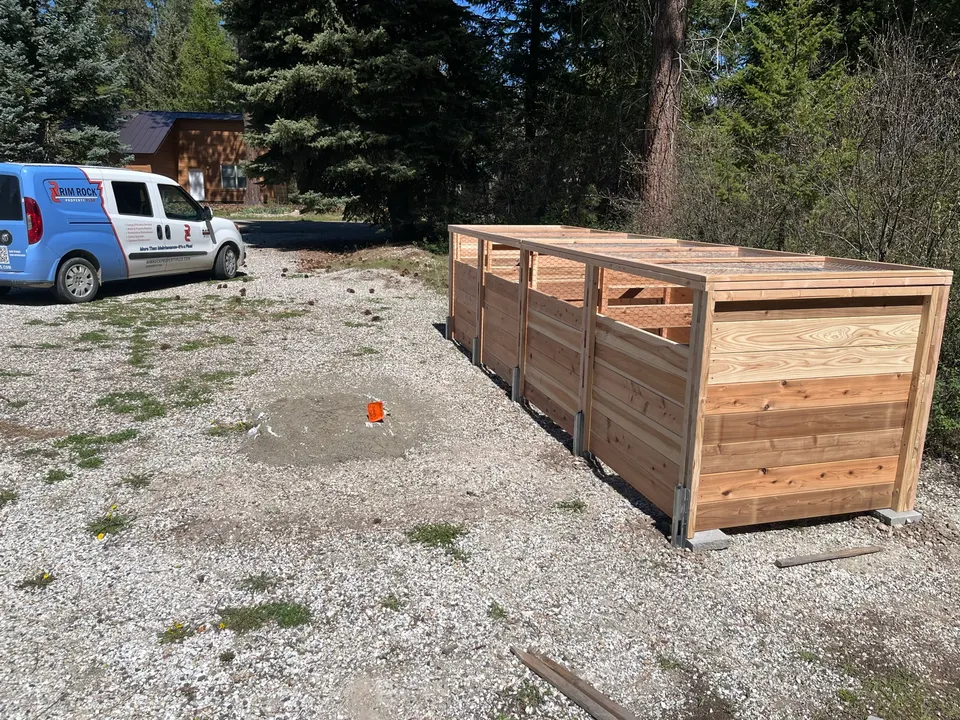
From assessment to finished repair
The first visit is about scope and containment. We walk the damage, figure out what is urgent and what can wait, and perform temporary repairs where they are needed: covering roof damage, sealing broken glazing, clearing debris off structures. Everything gets photographed as we go, before and after, so the record of what happened is built while the evidence is fresh. From there, the job becomes a plan. We write up what needs repair, in what order, and handle the work that fits our trades directly. For damage that calls for a specialist, like structural or major roofing work, we coordinate rather than disappear, so you are managing one relationship instead of chasing four contractors after a storm has already eaten your week. The goal is a house that is protected after the first visit and fully repaired without you running the project.
Wind, snow load, and ice: what breaks here
Storm damage in North Spokane County has a pattern. Windstorms take down ponderosa limbs, and a dropped limb rarely misses; it finds the roof, a fence line, or the power service mast. Heavy wet snow loads flat roofs, carports, and older outbuildings past what they were built to carry, and the failure shows up as sagging before it shows up as collapse. Ice does slower work: freezing rain coats and snaps branches, and ice dams pry at shingle edges and gutters through every thaw. The common thread is that storm damage compounds. A punctured roof membrane or torn shingle field lets the next weather system in, and around here the next system is rarely far behind. That is why temporary protection comes first in our process, and why we encourage calling promptly even when the damage looks minor from the ground.
Documentation your insurance claim can use
A storm claim lives or dies on documentation, and the best documentation is captured before anything is moved or repaired. We photograph damage thoroughly on the first visit: wide shots that establish location, close-ups that show severity, and photos of the temporary repairs we install. You get all of it, organized, along with a written description of what we found and what we recommend. That package gives you and your adjuster a shared set of facts to work from. We are not adjusters and we do not negotiate your claim, but we can walk the property with your adjuster, answer questions about what we saw, and provide repair scopes for the work. Owners handling a first claim usually find the process much calmer with dated photos and a written scope in hand instead of a memory of how bad it looked.
Why homeowners hand this to us
- Temporary repairs that stop the damage from spreading
- Thorough photo documentation from the first visit
- Written repair scope you can hand your adjuster
- One contact from assessment through finished repair
- Coordination with specialists when the job calls for one
- Storm calls worked into the schedule ahead of routine work
How it goes
- 1
Assess and make safe
We walk the damage, handle urgent temporary repairs, and keep weather out of the house.
- 2
Document everything
Wide and close-up photos plus a written description, captured before repairs erase the evidence.
- 3
Scope the repair
You get a clear write-up of what needs fixing, in what order, with our recommendation.
- 4
Repair and coordinate
We complete the work in our trades and coordinate specialists for anything beyond them.
What does Storm Damage Repair cost?
Storm repair cost depends on what got hit and how far the water traveled afterward. A few torn shingles and a fence panel is a different job than a limb through the roof deck, and hidden moisture damage found during repair is the most common reason a scope grows. Access matters too; steep rooflines and second-story damage take more setup. Insurance often carries much of a legitimate storm claim, which is one reason documentation is built into our process. Members get a member discount on repairs and seasonal packages.
For members
Members are already in our system, which makes the after-storm call shorter: we know the property and the prior work, and priority scheduling moves members up the list when a storm has everyone calling at once. Summit Care members get a further advantage, since seasonal visits catch loose shingles and weak limbs before the storm finds them.
Compare Home Care and Summit Care →Questions homeowners ask
How soon can you come out after a storm?
We work storm damage calls into the schedule ahead of routine maintenance, and members get priority scheduling. We do not promise a response time; after a big regional storm, everyone is calling at once. What we can tell you is where you stand when you call, honestly, so you can plan.
Do you work with insurance?
Yes, on the documentation side. We photograph everything on the first visit, provide a written scope of repairs, and can walk the property with your adjuster. We are not adjusters and do not negotiate claims, but our records give you a solid, dated file to bring to yours.
Should I fix anything before the adjuster sees it?
Make it safe and stop active damage; insurers expect reasonable steps like tarping a roof, and waiting can make things worse. Photograph everything first, or have us do it. Hold off on permanent repairs until the claim is moving. Our temporary repairs are designed for exactly that gap.
What kinds of storm damage do you repair?
Wind damage from downed limbs, roof and gutter damage from snow load and ice, broken fencing, siding, and outbuilding damage, and the water intrusion that follows all of it. Structural or major roofing work gets a specialist, and we coordinate that work so you still have one point of contact.